The Story of
Dr. Francis LeBaron
(1668-1704)
Click on any image for a closer look
Dr. Francis LeBaron arrived in Plymouth, Massachusetts, in the 1690s, supposedly in a longboat with other French passengers from a shipwreck. Because of his medical training, he became the settlement's physician until his untimely death in 1704. The three sons he and his wife Mary Wilder (married in 1699) had would go on to plant an extensive tree of LeBaron descendants that carry on to this day. Several of these descendants, including Dean LeBaron, 6th great-grandson of Dr. Francis, have for many years sought the origins of "the French doctor." Most believe Dr. Francis took the LeBaron surname upon arrival in Plymouth, leaving the identities of his parents and his birth surname in question.
This page intends to collect the relevant knowledge that has been gathered, in hopes that through further genealogical research and DNA testing, the mystery will finally be revealed.
Existing Research
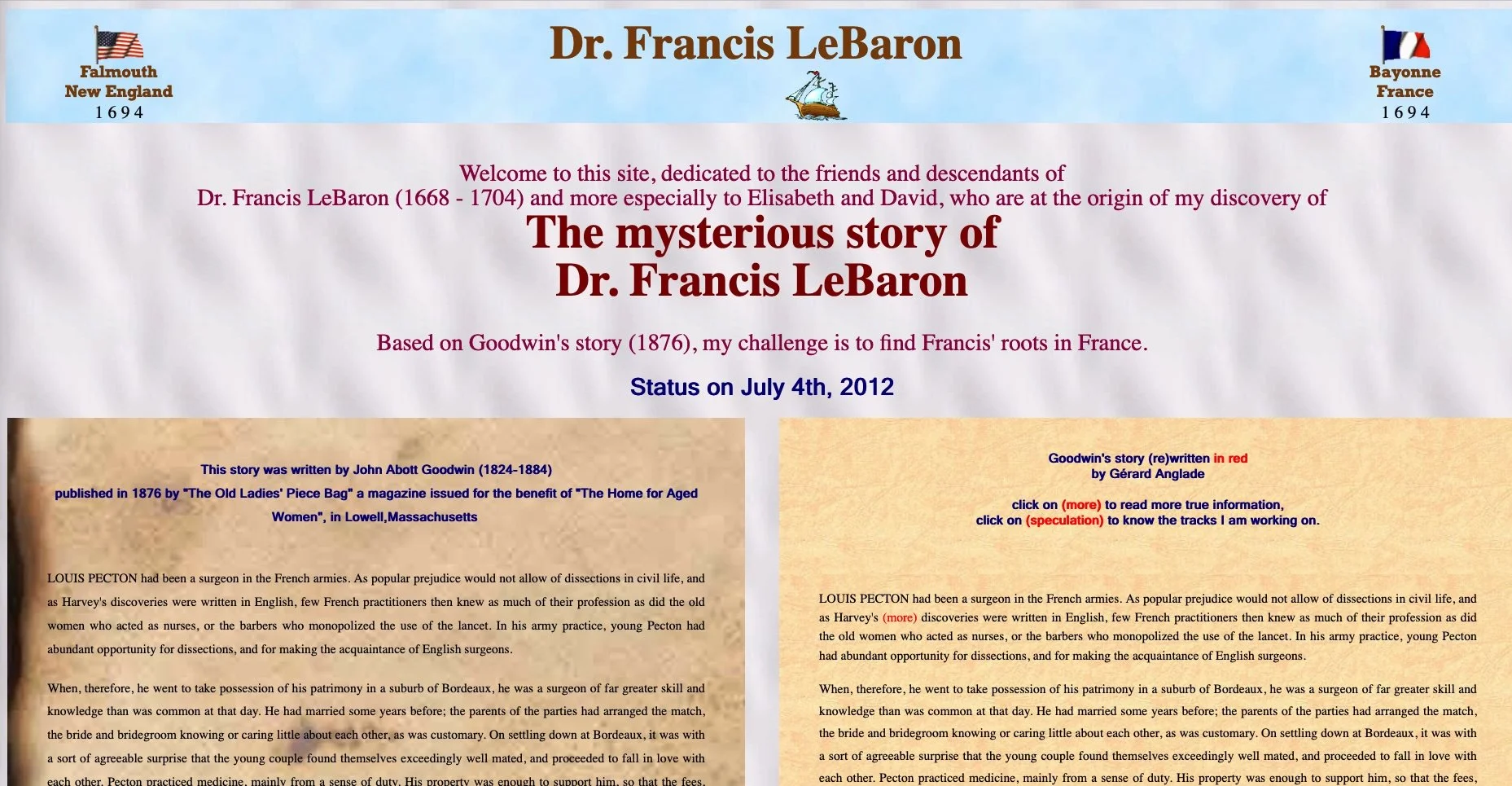
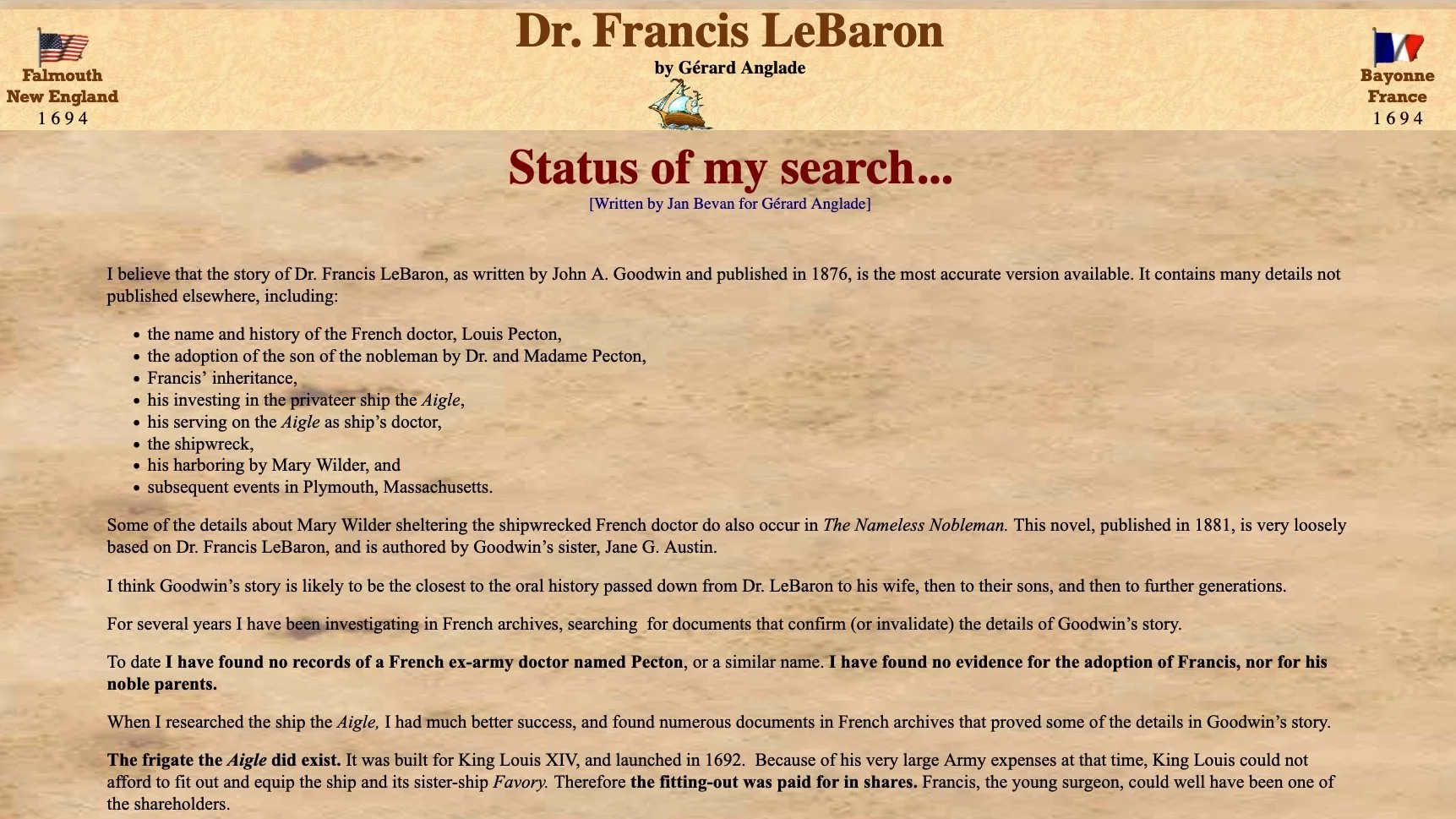
Research by Gérard Anglade
The following two links lead to the web pages of Gérard Anglade, who from 2003-2016 along with Jan Bevan, researched and documented their findings about the story of Dr. Francis LeBaron.
Research by Legacy Tree Genealogists
The following three reports were researched and written by Legacy Tree Genealogists in 2021-22. Names of living persons have been redacted.
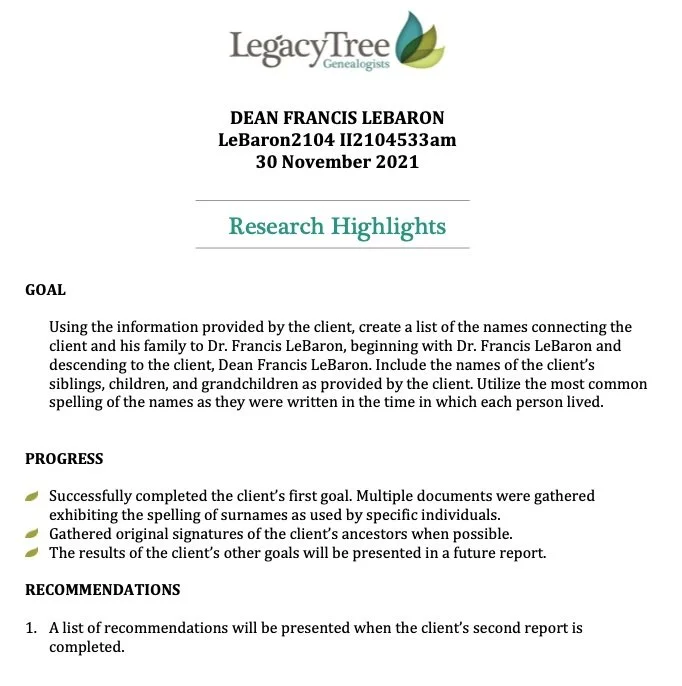
Report 1: Descendants of Dr. Francis LeBaron
The LeBaron pedigree from Dr. Francis LeBaron down to Dean LeBaron and his living kin was verified. Signatures of each of the LeBaron ancestors were obtained when possible.
©2021 Legacy Tree Genealogists, https://legacytree.com.
Report 2: Who was Dr. Francis LeBaron?
Existing accounts of Dr. Francis LeBaron's arrival and his time in Plymouth were carefully examined, comparing them with genealogical and historical evidence. The report disproves many facts claimed in the existing stories, but does shed light on potential further avenues of research.
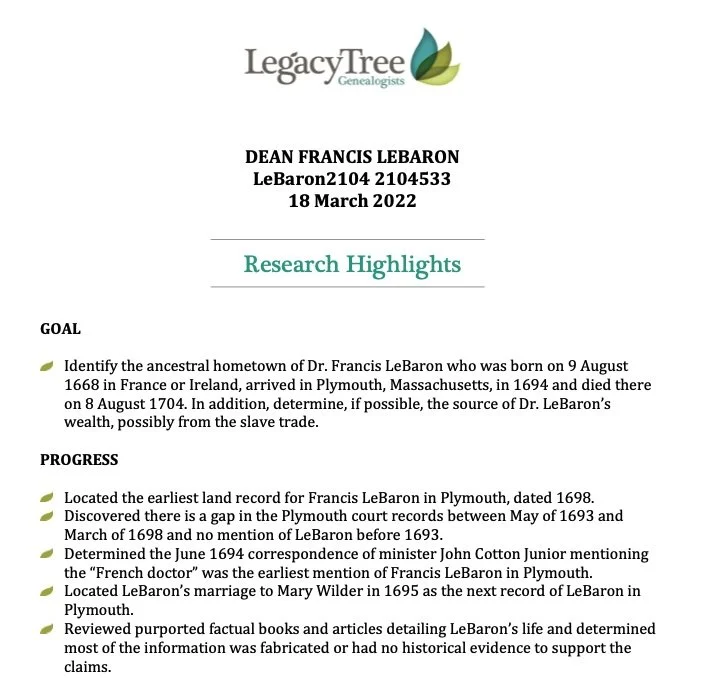
©2022 Legacy Tree Genealogists, https://legacytree.com.
Report 3: A DNA Study
Results from Dean LeBaron's Y and autosomal DNA tests were analyzed and discussed, They provide additional evidence of Dean's descent from Dr. Francis and suggest further areas of research.

©2022 Legacy Tree Genealogists, https://legacytree.com.
Original Documents
The following records are all referenced and explained in further detail in Report 2 from Legacy Tree Genealogists (see left column). The images below help us visualize the content.
1694 - A Plymouth Letter
In June 1694, Plymouth minister John Cotton Junior, who served the congregation until the fall of 1697, referred to Francis LeBaron as the “French doctor” in letters, indicating that LeBaron was in residence in Plymouth by that date. See the highlighted text below in the extract of a letter of June 12.
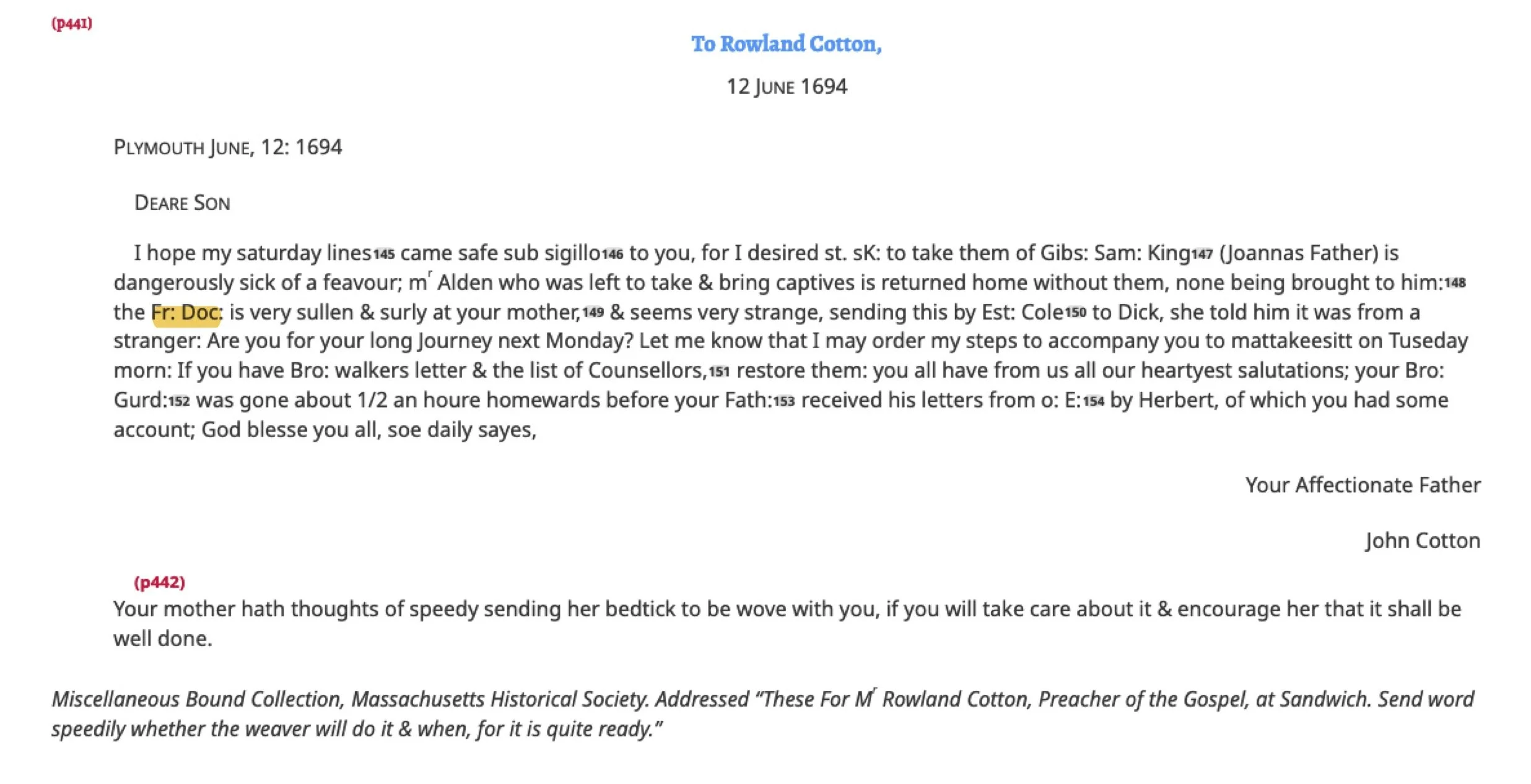
https://www.colonialsociety.org/node/1870#p441, John Cotton Jr. to Rowland Cotton, 12 June 1694,
in Sheila McIntrye and Len Travers, eds., The Correspondence of John Cotton Junior, Publications of the Colonial Society of Massachusetts no. 79 (Boston: The Colonial Society of Massachusetts, 2009), p. 441, accessed Aug 2024.
1695 - Marriage to Mary Wilder
The following document shows the original Plymouth Colony marriage record of Francis LeBaron and Mary Wilder in 1695. The indicated text reads "Francis LeBaron was Married unto Mary Wilder on the first day of September 1695."


Ancestry.com, Massachusetts, U.S., Town and Vital Records, 1620-1988, Plymouth / Births, Marriages and Death,
image 70 of 3129, accessed 21 Jul 2024.
1697/8 - Purchase of Land in Plymouth
On 18 March 1697/8, Francis LeBaron purchased 45 square feet of land in Plymouth Colony for £4 10s (about $14,000 today). The following is an excerpt from that transaction in the land records. The indicated text reads "To all Christian people to whom this process shall come. Nathanial Howland of Plimouth in the county of Plimouth in New England yeoman sendeth Greetings. Know that the said Nathanial Howland for and consideration in the full and just sum of four pounds and ten shillings current money of New England aforesaid to now in hand at the of enforcing and delivery of those [...] by Francis LeBaron of Plimouth aforesaid in the county aforesaid..."
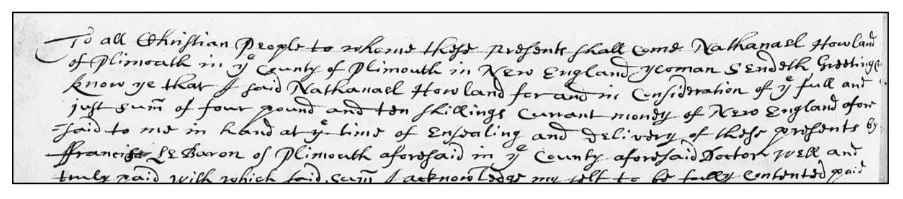
FamilySearch.org, Massachusetts Land Records, 1620–1986, sale of land from Nathanael Howland to Francis LeBaron,
18 March 1697/8, Plymouth, Massachusetts, accessed August 2024.
1699 - Was the Assault "by" or "on" Dr. Francis LeBaron?
The following is a fascinating glimpse into an incident involving Dr. Francis LeBaron in 1699. The original document is in the Pilgrim Hall Museum and the write up is by Karen LeBaron Basli.
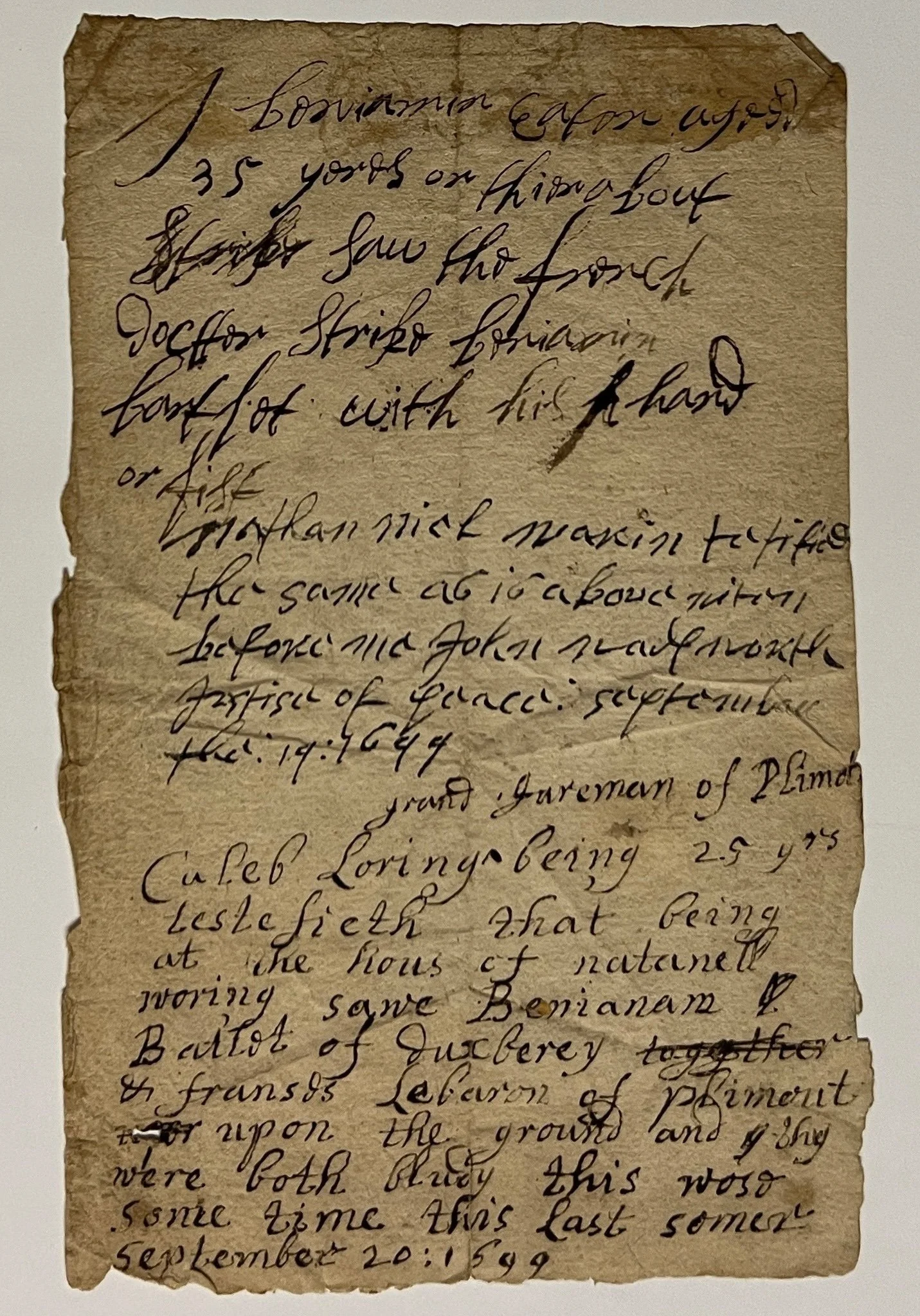
This document has been prepared for the enjoyment of family and friends. Please do not publish in in whole or part either in print or online without permission. In particular, the photo of the actual document, which I took in Oct. 2014, requires the permission of Pilgrim Hall Museum for publication. Thank you. Karen Basli, May 28, 2015.
1704 - Will and Probate Papers
Francis LeBaron passed away on 8 August 1704 in Plymouth. His probate and will (click on the image below to view) is 9 pages and contains both a lengthy list of household items and extensive land holdings.
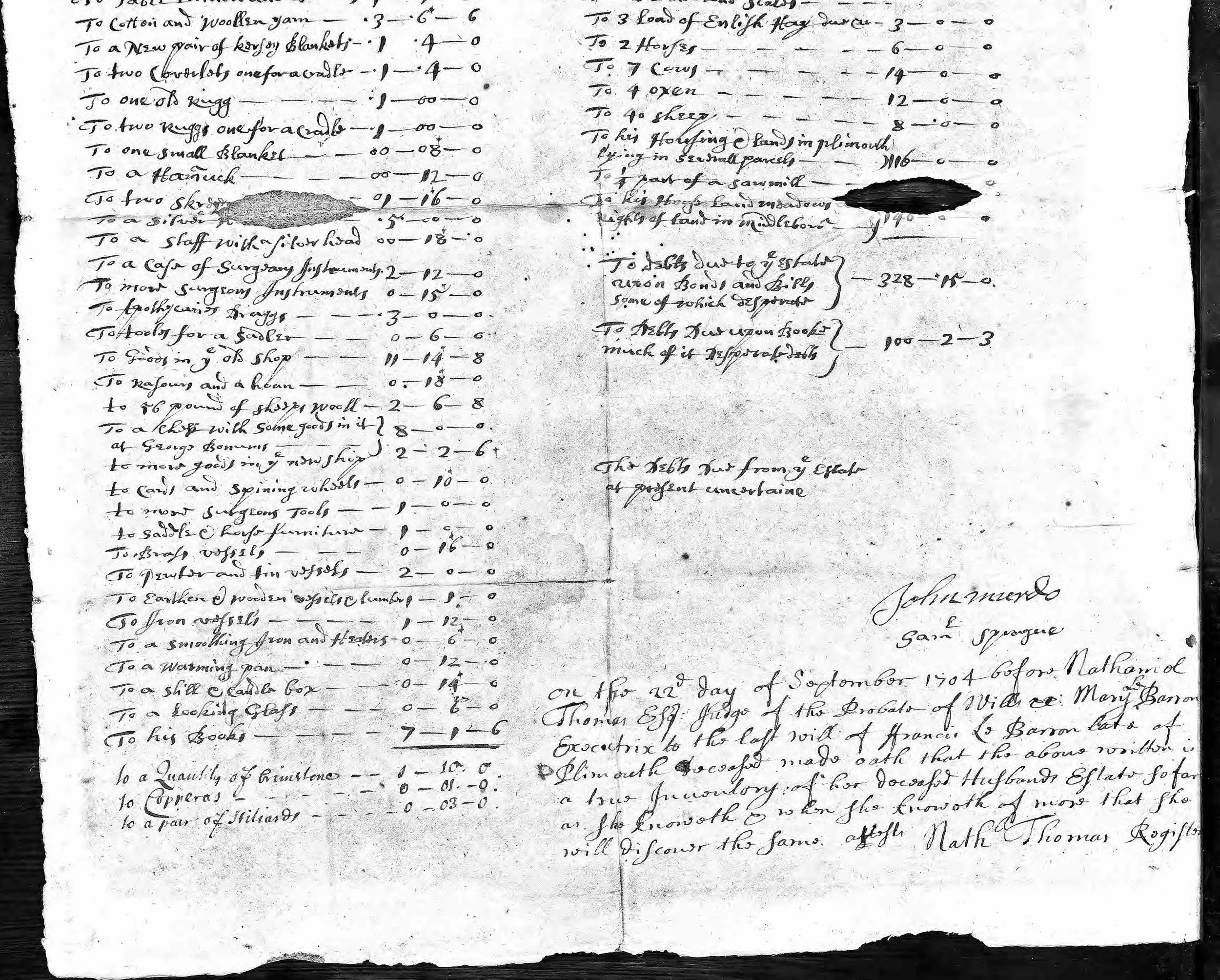
Ancestry.com, Massachusetts, U.S., Wills and Probate Records, 1635-1991, Plymouth / Probate Estate Files,
No. 12501-12570, Leavitt, Gad - Leonard, Abby L., Ca. 1686-1915, images 722-730 of 1223, downloaded 21 Jul 2024
2025-26: Research by Philippe Chapelin
French historian and genealogist Philippe Chapelin was hired in 2025 to research archives in France for clues to the origins of Dr. Francis LeBaron. A summary of his findings is below, along with a link to the full 20-page report and suggestions for further research.

“Recent exhaustive research in the French Admiralty of Guyenne archives has definitively refuted the romantic 19th-century myths surrounding Dr. Francis LeBaron: he was not an exiled nobleman, and the corsair ship L'Aigle neither sank in North America nor lost its official surgeon to Plymouth. Instead, the findings place his transatlantic journey squarely within the gritty reality of the Nine Years' War, where young, often Protestant medical practitioners from southwestern France used the vast Huguenot privateering networks as a means of survival, employment, and clandestine migration. Forced to flee or hide, it is possible he adopted 'Le Baron' - a fairly common surname that also appeared among maritime captains in those networks -as a "plausible pseudonym" to protect his true identity and any family left behind in France.”
Suggestions for Future Research Activities:
While the Huguenot context in Bordeaux is compelling, my final critical review of the data highlighted an alternative that perfectly aligns with specific details of the American oral tradition (namely, his wearing of a gold cross and adherence to the Catholic faith): the Breton Catholic hypothesis. For future research, I strongly suggest pivoting to this avenue:
Breton Admiralties & Naval Records:
We should target the Departmental Archives in Brittany (Morbihan, Ille-et-Vilaine, Finistère) and the Naval Historical Service (SHD) in Lorient and Brest to track naval surgeon assignments between 1688 and 1694.Medical Training:
Search the reception registers of the barber-surgeons' guilds (e.g., in Vannes, Saint-Malo, or Nantes) and the Marine hospitals where young practitioners trained before embarking.Parish Registers:
Systematically screen the Catholic parish registers of coastal towns like Île d'Arz and Quiberon—where we already found captains named Le Baron—for the birth of a François (or Francisque) Le Baron around 1668. I have already explored the indexes of vital records and found no clue on this side but we would need to explore this parish by parish around these places.Saint-Malo Privateers & English Archives:
Investigate whether Saint-Malo privateers operated in North American waters in the early 1690s, and cross-reference this with British Royal Navy archives for lists of French prisoners of war taken in 1693-1694.
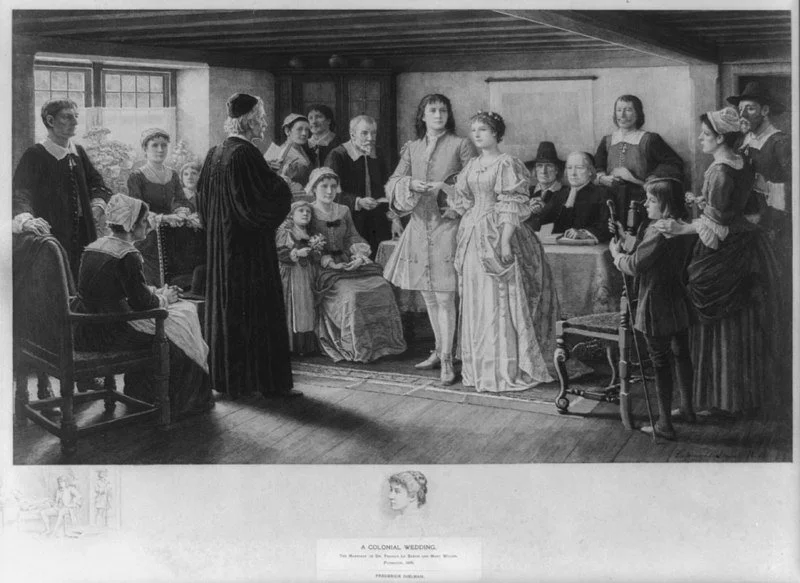
1898 - The LeBaron-Wilder Wedding Painting
The painting below was done by Frederick Diehlman, a German-American portrait and figure painter, in 1898. It is entitled "A colonial wedding, the marriage of Dr. Francis Le Baron and Mary Wilder, Plymouth, 1695.” High-resolution images exist online and are free to download. The original is owned by Yale University.